

A rebrand is a change of strategy that the look then follows. It usually runs in six stages: an audit of what you have, the brand strategy, the new identity, the things the identity lives on (packaging, website, materials), the guidelines, and the launch. A rebrand with a website and a launch takes about 3 to 6 months. The cost depends on the scope. This guide explains each stage, what you receive at the end, and the six things that make a rebrand bigger or smaller.
If you are not sure you need a full rebrand, read rebrand vs brand refresh first. A refresh keeps the strategy and updates the look. A rebrand changes both.
The six stages
The order below is the usual one. It changes a little from one client to another, because some arrive with a clear strategy and others need the website before anything else.
1. Audit: what to keep
A rebrand does not start from a blank page. It starts from a business that already has customers. So the first job is to list what people recognize and trust (a name, a color, a shape, a way of talking) and decide what stays. Whatever stays becomes the bridge between the old brand and the new one.
2. Brand strategy
This is the part that makes it a rebrand and not a new logo. Brand strategy covers the positioning, the target audience, the brand personality, the voice and tone (how the brand talks) and the key messages. It also covers the name, if the name is part of the problem, and the brand architecture, if you have several products or divisions.
The decision at the end of this stage is one sentence: who the brand is for and why they should choose it. Everything after it is built on that sentence.
3. The new identity
Now the strategy gets a face. The visual identity is the main logo with its secondary versions, the color palette, the typography and the graphic elements such as patterns and icons. If the brand works in two languages, both are designed together. A bilingual Arabic and English identity takes more time, because the second script is designed, not translated.
Sometimes a client suggests something at this stage that would not work for their business. We explain why and propose what will.
4. Where the identity lives
A logo in a PDF changes nothing. The rebrand becomes real on the things customers touch: packaging for product brands, the website, social media templates, stationery, signage, sales presentations, ads. This stage is usually the largest part of the work, and its size depends on how many of these you have.
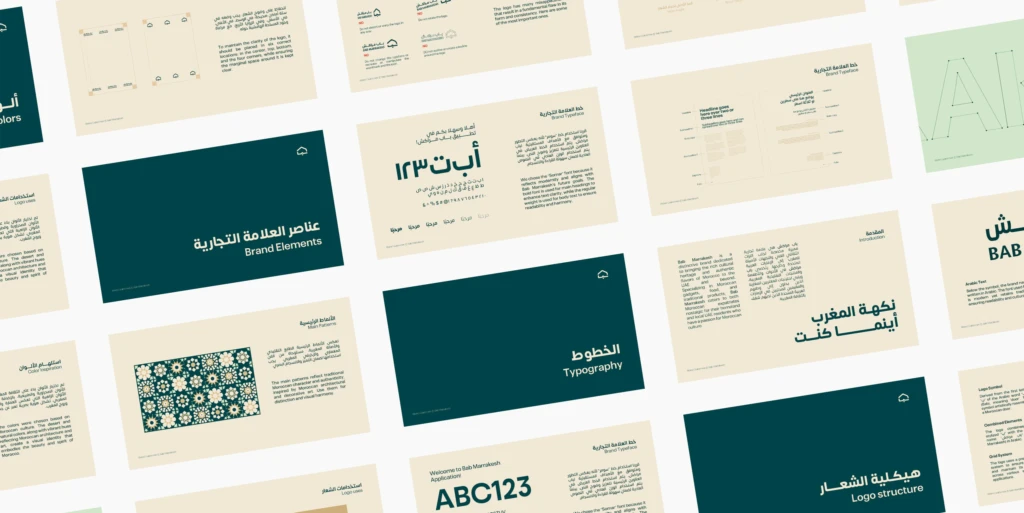
5. Guidelines and files
The guidelines explain how to use the identity, so the brand still looks right after the project ends. Everything we develop for the client is theirs: vector masters (AI, SVG, PDF), PNG and JPG exports in color, black and white and reversed versions, font files or licence details, and the guidelines PDF, in clear folders. Ask also for the files people forget: social profile picture sizes, a favicon, a one-color version for stamps and embroidery, and editable templates.
6. Launch
A rebrand that appears overnight with no explanation confuses the customers you already have. The launch tells them what changed and why, and it replaces the old identity everywhere in a planned order. Our marketing materials and brand launch work covers this stage.
A real one: Bab Marrakesh
Bab Marrakesh is an online store in the UAE that sells Moroccan products, from pantry staples to traditional home goods. The products were loved, but the brand looked dated, and it was selling in Dubai next to big platforms like Noon.
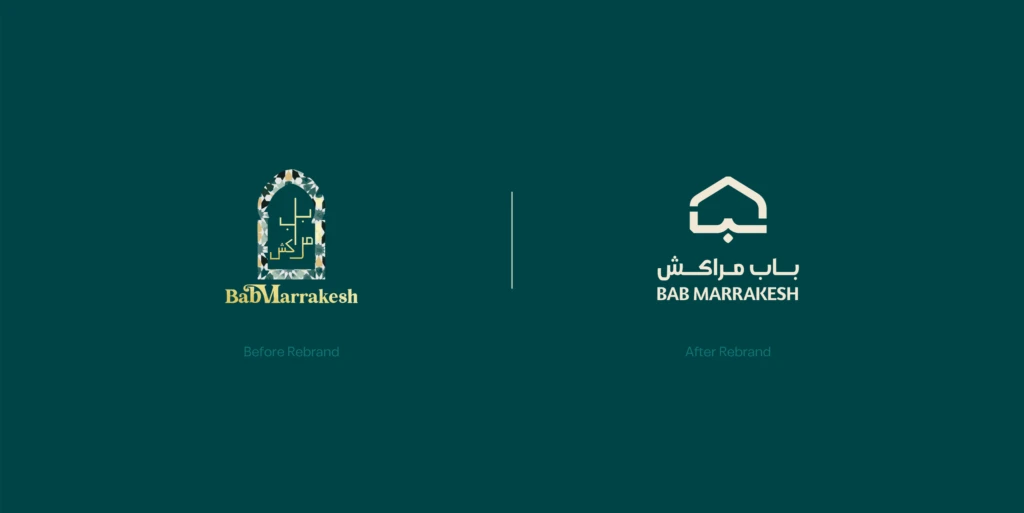
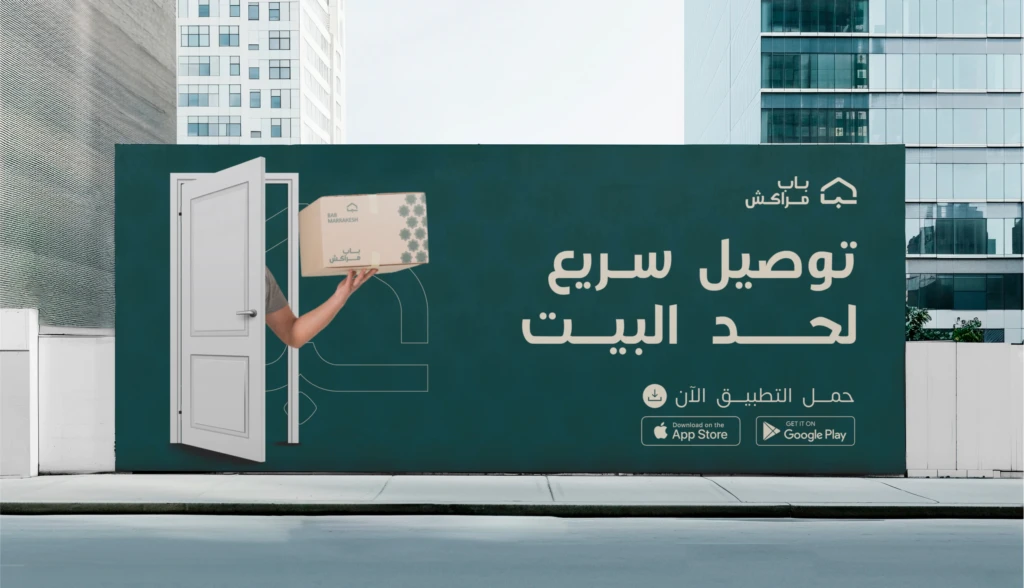
The rebrand in 2024 covered the stages above: brand strategy, a new bilingual Arabic and English logo and identity system, a clearer brand story centered on authenticity and home, social media templates, outdoor advertising, a new e-commerce website built around the identity, and a launch campaign.
Revenue grew 366% in the first three months after the rebrand. Monthly revenue went on to reach $12,000, up from $720 before it. These figures were reported by the client.
“Our previous branding missed the luxury standard required for the UAE market. We Craft Studio elevated our visual identity, instantly positioning us as a premium, high-end competitor.” Ghita, Founder, Bab Marrakesh.
We have also done full rebrands for DET (Dynamic Energy Trading) in the Netherlands, with a new brand identity and website, and for Taxi Sahbi in Morocco.
How long a rebrand takes
These are the timelines we give, depending on scope and feedback speed:
| Scope | Typical timeline |
|---|---|
| Visual identity | 4 to 8 weeks |
| Brand identity with strategy and guidelines | 8 to 12 weeks |
| Packaging, one product to print-ready files | 4 to 8 weeks |
| Packaging range | 8 to 12 weeks |
| Rebrand with website and launch | 3 to 6 months |
The slowest part of a rebrand is rarely the design. It is the feedback. A project with one decision-maker who answers in two days moves much faster than one with a committee that meets every two weeks.
What drives the cost
We quote every rebrand after a discovery call, because the price depends on the scope of work. Six things decide how big that scope is:
- How much strategy is needed. A brand with a clear position needs less than one that has to find its audience again.
- The name. Keeping the name is one project. Changing it adds naming work and checks.
- The number of touchpoints. A service business with a website and a deck is a smaller job than a product brand with twelve packs, a store and a fleet of vans.
- Languages. Each extra language adds design time for the logo, the type and every application.
- The website. A redesign of an existing site, a new build, or an online store are three different sizes of work.
- The rollout. Someone has to reprint the packs, replace the signs and update every profile. The studio’s fee is one cost. Production is another, and it belongs in the same budget.
When you compare quotes, compare the scope line by line. Two prices for “a rebrand” can describe two very different amounts of work.
What to have ready for the first call
Just yourself. The first call is for us to get to know each other and understand what you need. It helps if you can say what is not working today, what must not change, and when you want to launch.
Planning a rebrand and want a clear scope before you commit? Start a project with a short brief, or book a call.
Frequently asked questions
What does a rebrand include?
An audit of the current brand, the brand strategy, a new visual identity, the applications the identity lives on (packaging, website, marketing materials), brand guidelines, and a launch.
How long does a rebrand take?
A visual identity takes 4 to 8 weeks. A brand identity with strategy and guidelines takes 8 to 12 weeks. A full rebrand with a website and a launch takes 3 to 6 months, depending on scope and how fast feedback comes back.
How much does a rebrand cost?
It depends on the scope: how much strategy is needed, whether the name changes, how many touchpoints and languages there are, the website, and the rollout. We quote each project after a discovery call.
Do I have to change my name in a rebrand?
No. Many rebrands keep the name and change the positioning and the identity around it. The name changes only when it is part of the problem.
Will a rebrand confuse my existing customers?
It can, if it appears with no explanation. Keeping the elements people recognize and announcing the change in a planned launch avoids that.
Should the website be redesigned at the same time?
Usually yes. The website is where many customers meet the brand first, and an old site with a new logo sends two messages at once.